Who Is the Swordsman in Black Myth: Zhong Kui? The Three Cases, Weighed

Game Science has never told us who the white-robed swordsman in Black Myth: Zhong Kui is. Not in the 15-minute gameplay demo, not in the reveal teaser, not in any official post. What the studio has done is stranger and more interesting: it keeps publishing lines that ask the question for us. This page gathers the official clues and weighs the three main readings of the swordsman's identity — with each one's evidence, and each one's breaking points.
Research boundary. Nothing here is confirmed by Game Science. Official texts below are quoted from official material and marked as such; everything built on top of them is interpretation, and we label it that way. English renderings of Chinese material are our provisional translations unless noted.
What we found
- Game Science has not named the swordsman anywhere — and its own marketing lines keep pointing at the question of who he is.
- The strongest on-screen case is the simplest one: the swordsman is a younger Zhong Kui. A matching scabbard, a forehead wound and the closing shot all lean that way.
- The most textually anchored reading is the boldest: he is a ghost tied to Zhong Kui himself — and a Qing-dynasty notebook describes exactly the technique that would make it possible.
- A widely shared version of the studio's key line about "ghosts of the heart" is not the official wording. The official text says something subtler.
- The mirror-match duel at the end of the demo is a deliberate visual riddle. We can show what it is; we cannot yet say who he is.
The official record is asking the question
Three pieces of official material frame the mystery before any fan theory begins.
The reveal teaser's verse (August 20, 2025). The CG teaser that announced the game carried an official poem opening with "世上何尝有鬼?妖魔皆从心生" — "Were there really ghosts in this world? Demons are born of the human heart." (official upload) From day one, the game's own marketing has suggested its ghosts may be something other than literal monsters.
Yang Qi's closing line (August 20, 2026). Alongside the gameplay demo, the studio's art director ended a long post with: "捉山中鬼易,捉心中鬼难" — "Mountain ghosts are easy to catch; the ghosts of the heart are hard." (full text, Chinese media mirror)
Feng Ji's announcement-day post (August 20, 2025). Explaining why the studio chose a new game over Wukong DLC, the producer wrote: "我们更想先做一款黑神话的新作——新的英雄,新的玩法,新的视觉,新的技术,新的故事。放开手脚,大胆尝试,不拘定法,从零开始" — "We would rather make a new Black Myth title first — a new hero, new gameplay, new visuals, new technology, a new story. Hands untied, bold attempts, no fixed rules, starting from zero." (Beijing News transcript) "A new hero" and "starting from zero" are doing quiet work here.
And the demo's own narration closes with two lines from an official poem:
剑下有血,染作新妆……谁道黄泉路远?正好,再走一趟。
Translation by ZhongKui News: "Blood beneath the sword, dyed into fresh makeup… 'Who says the road to the Yellow Springs is far? Good. Let us walk it once more.'" (No official English version exists; our full rendering of the poem is in the Gameplay Deep Dive.)
Someone in this story has walked that road before.
The three cases at a glance
| Reading | Core claim | Key evidence | Our call |
|---|---|---|---|
| A. A younger Zhong Kui | The swordsman is Zhong Kui before godhood | Matching scabbard; forehead wound; the tiger-riding closing shot | Strongest screen evidence |
| B. A dead man | He is a ghost working as a ghost-catcher | Wounds that never heal; the drowned pallor; underworld logic | Weakest direct evidence |
| C. A ghost of the heart | He is a ghost born from Zhong Kui — neither fully alive nor dead | Possession mechanics; a Qing-dynasty textual parallel; the official taglines rhyme with it | Most textually anchored |
All three circulate in Chinese-language community discussion. None is confirmed. What we can add is the evidence check.
Case A: a younger Zhong Kui
What the demo shows Observed
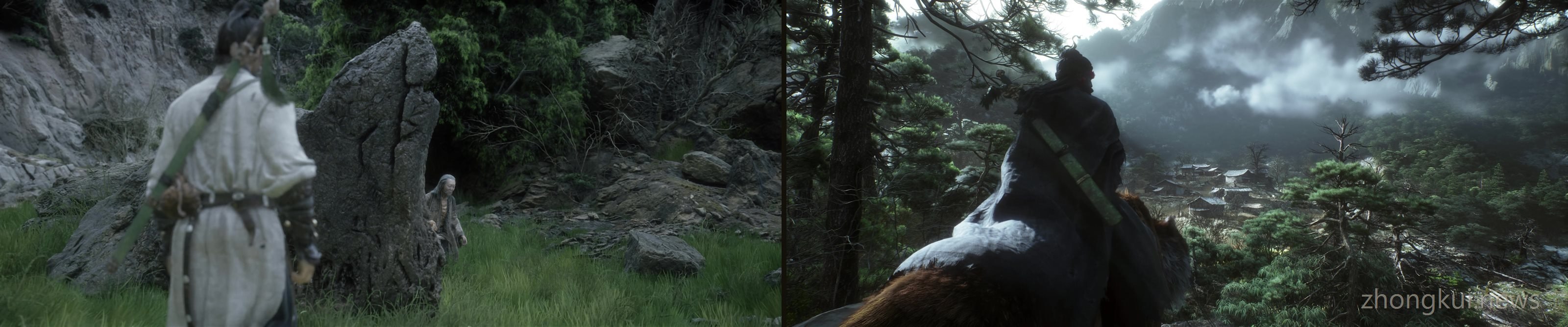
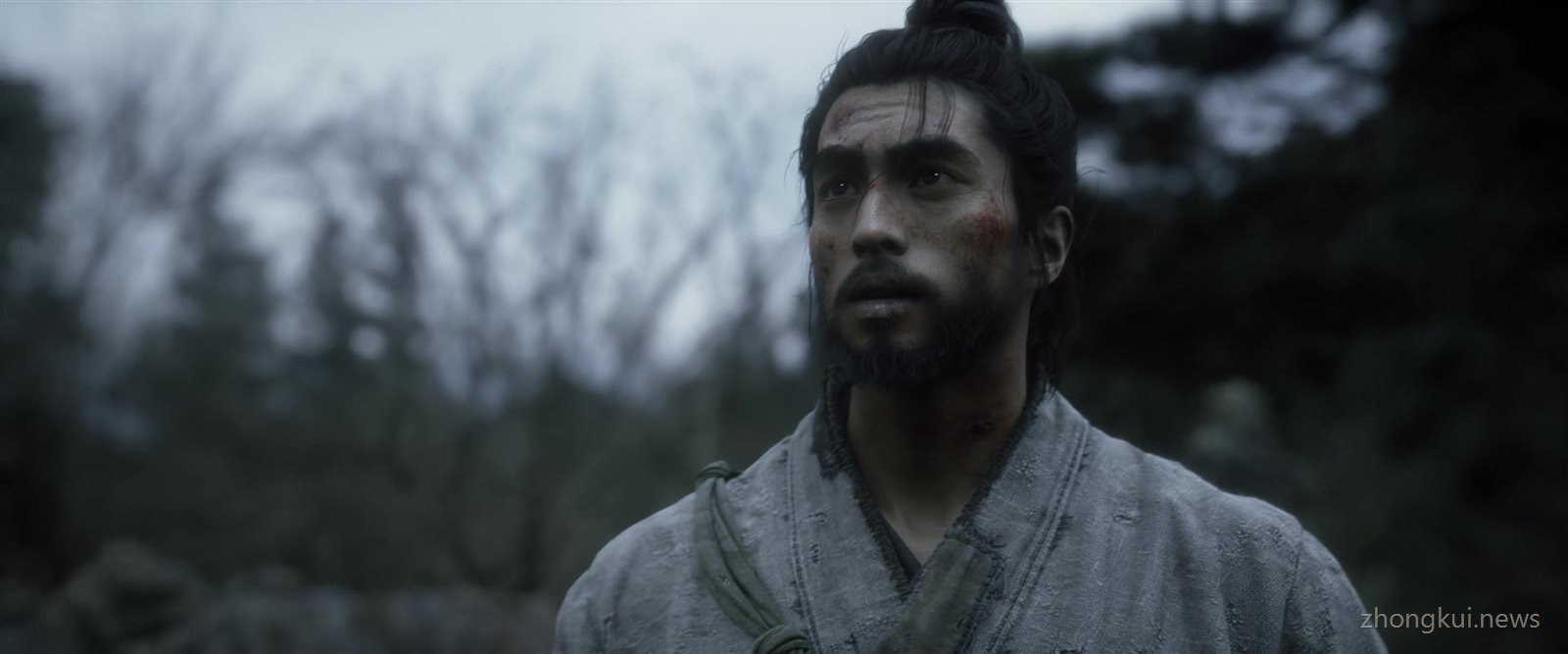
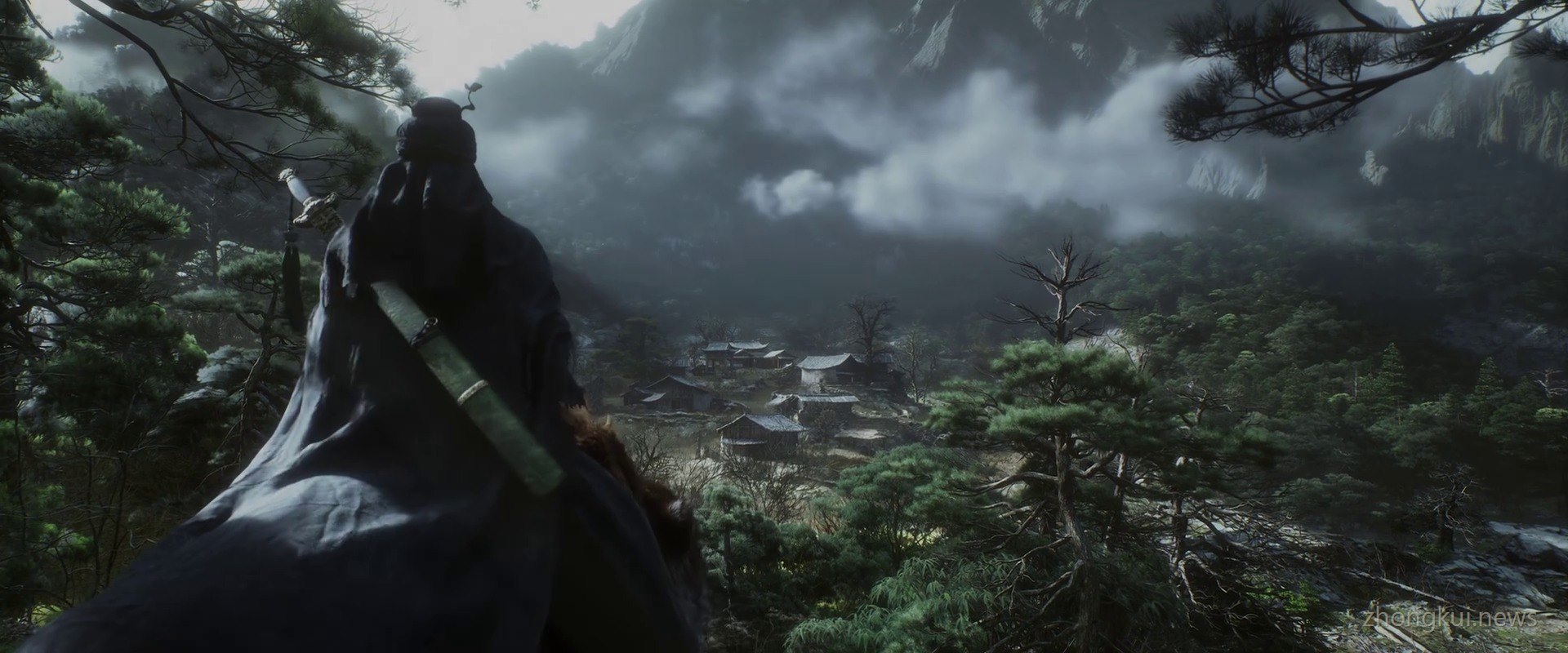
The swordsman carries a long scabbard wrapped in a distinctive green. In the demo's final shot, the tiger-riding figure in the black cloak — the one everyone agrees reads as Zhong Kui — carries what appears to be the same scabbard at the same angle. Earlier, at 1:16, a dark old scar is visible on the swordsman's forehead.
Why the wound matters
In the best-known strand of the legend, Zhong Kui is a brilliant scholar humiliated at the imperial examinations who dies on the palace steps. The texts disagree on details, and the disagreement itself is worth stating precisely. The Mengxi Bitan (梦溪笔谈), our earliest scholarly anchor, records only that he "failed the military examination" — no death at all (Bubit'an, juan 3). The death by "striking the palace steps" (触阶) comes from the lost Tang Yishi, preserved in later compilations (Gaiyu Congkao, juan 35). The Qing novel Zhong Kui Slays the Ghosts has him draw a guard's sword and cut his own throat (chapter 1). The pillar-slamming version you may have seen online has no traceable pre-modern source at all.
A forehead scar is a quiet, deliberate detail to animate. If it is meant to echo the death story, the demo's swordsman is Zhong Kui before the underworld promotion — the man who has not yet hit the steps, or who carries the mark of having done so. Analysis
Where the case breaks down
The scabbard match proves two props look alike, not that two men are one. The tiger rider's face is never shown — and a studio that hides a face in the final shot is asking you to wonder whose face it is. Feng Ji's "a new hero… starting from zero" sits awkwardly with simply playing young Zhong Kui. The evidence is strong on screen and silent everywhere else.
Case B: a dead man
The reading
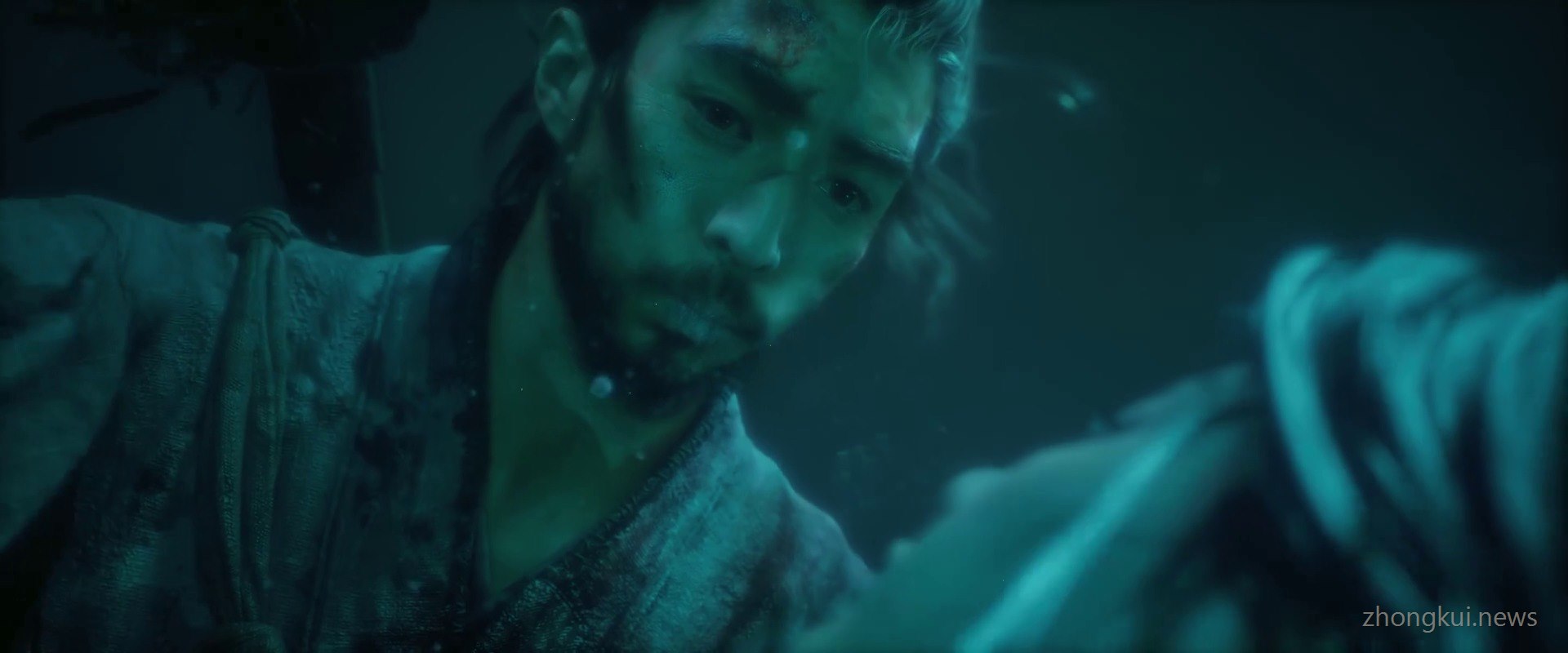
A second reading starts from the poem's "walk the road of the Yellow Springs once more" and the marsh full of drowned, unquiet dead: the swordsman is himself dead — a ghost conscripted to catch ghosts. Its supporters point to how rough the world treats him (he falls, and it hurts), how pale and still he floats in the underwater sequence, and how at home he seems among the dead. Analysis
Where the case breaks down
The reading's most-cited visual — a frame where the swordsman's face supposedly flashes into a skull — is one we could not confirm when we went through the footage ourselves; we found no clean frame of it, so we treat it as unverified and show no image. The remaining evidence (he falls, he looks pale, the poem mentions the underworld road) fits a living man in a ghost's country almost as well as a dead one. This case explains the mood of the demo better than its mechanics.
Case C: a ghost of the heart
What the demo shows Observed
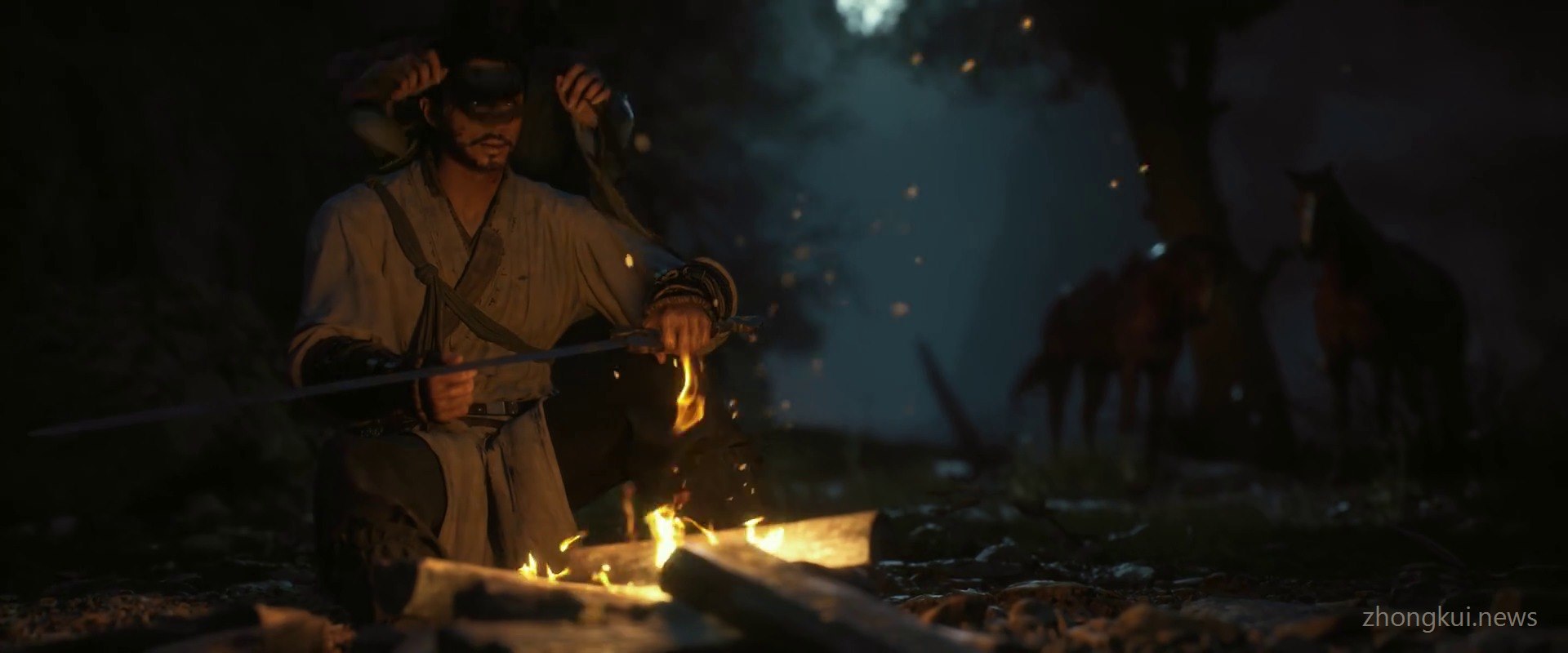
During the boss fight, the swordsman summons a black-cloaked spirit ally — and at about 12:00, when the spirit takes over the brawl, the swordsman's own body is nowhere on screen. Later montage shots show him catching creatures with burning talismans rather than killing them. The demo repeatedly frames the protagonist as someone who can leave his body, or share it.
The primary text
The Qing-dynasty notebook Yuewei Caotang Biji (阅微草堂笔记) by Ji Yun records a technique with an uncanny fit. In juan 2 (Luan-yang Summer Records II):
道家有借形法,凡修炼未成……则借一壮盛之躯,乘其睡与之互易。
Translation by ZhongKui News: "The Daoists have a body-borrowing method: when one's cultivation is not yet complete… one borrows a vigorous body and exchanges with it in its sleep." And in juan 16, a cleaner summary: "释家能夺舍,道家能换形" — "Buddhists can seize a vessel; Daoists can trade forms." (juan 2; juan 16)
One boundary, honestly drawn: the notebook's method is a two-way body swap between living men, not a ghost possessing a corpse. It proves the mechanics of a man leaving his body have a genuine textual tradition — it does not prove the swordsman uses it.
Why this reading fits the official words
Put the official lines in a row. "Demons are born from the heart." "Catching the ghosts of the heart is hard." "A new hero… starting from zero." A swordsman who is himself a ghost born of Zhong Kui's heart — an obsession given legs, fleeing the island of the dead into the living world, hunted by the very judge he belongs to — makes all three lines land at once. That is why this reading has traction in Chinese-language communities: not because a frame proves it, but because the studio's own words keep rhyming with it. Analysis
Where the case breaks down
A rhyme is not a reveal. The official lines were written as mood, not as a plot key, and the body-borrowing text is a parallel, not a source. This case also struggles with the scabbard: if he is only a heart-ghost, why does he carry Zhong Kui's sword like his own younger self?
The mirror at the Hanging Temple
Near the end of the montage, the swordsman duels a man who is dressed like him, armed like him, and fights like him — same robe, same sword style, same gourd at the waist — except that one carries three swords and the other one. The cliffside temple setting is a real location: the Hanging Temple outside Datong, Shanxi, which Black Myth: Wukong also used.
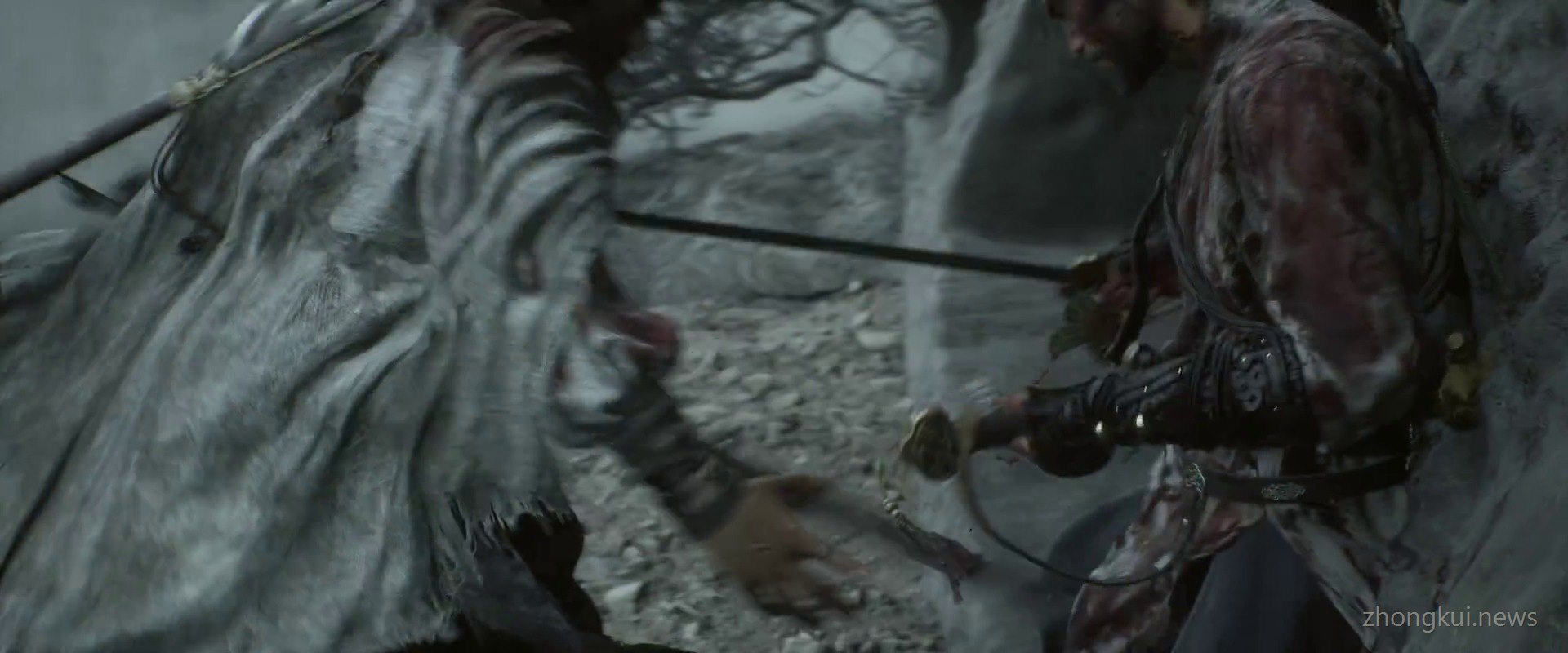
The two faces are visibly different men — different hairlines, beards, features. So this is not a literal mirror-fight with himself. But the matching kit is no accident; Game Science wants us comparing them. A rival, a predecessor, a future self, the man he used to be — the demo does not say, and neither will we. Verdict: Unresolved. Analysis
What we still don't know
- The swordsman's name and identity — no official statement exists in any language.
- Whether the tiger rider and the swordsman are one man, two men, or one man at two times.
- Who the duel opponent is, and why he carries three swords.
- Whether the ghost-catch mechanic is combat flavor or plot-critical.
- Any release window or platform specifics.
Why the question is worth leaving open
Game Science spent a poem, a blog post and a producer's announcement making one point: this game's ghosts come from the heart, and its hero started from zero. Every confident answer you will read this week — including, at times, our own three cases above — outruns the official record. The honest state of play is a matching scabbard, an old scar, a duel with no name card, and a studio that knows exactly what it is refusing to say. We will update this page when official material moves.
Related: the scene-by-scene demo read, the creature research reference, the Zhong Kui lore guide, and the latest official updates.
A note to readers
Unless otherwise noted, translations from Chinese official material and premodern texts, the frame analysis and the case assessments are by ZhongKui News. If you cite this research: ZhongKui News, "Who Is the Swordsman in Black Myth: Zhong Kui? The Three Cases, Weighed," August 22, 2026. Corrections and research questions are welcome via our contact page.
Update log. Published August 22, 2026. Official texts verified against official uploads and full-text media mirrors. Frames are from the official gameplay video.
Sources
Official material
- Official gameplay demo (Bilibili, August 20, 2026); English upload on YouTube. All timestamps and frames.
- Official reveal teaser (Bilibili, August 20, 2025). The "demons are born from the heart" verse.
- Yang Qi's demo-day post (full-text mirror, IT Home; also NetEase mirror). The official "catch the ghosts of the heart" wording.
- Feng Ji's announcement-day post (Beijing News transcript, August 20, 2025). "A new hero… starting from zero."
Primary texts
- Ji Yun, Yuewei Caotang Biji: juan 2 ("the Daoists have a body-borrowing method") and juan 16 ("Buddhists seize vessels; Daoists trade forms"). Chinese Text Project.
- Mengxi Bitan, Bubit'an juan 3 — CTP. The earliest scholarly record: examination failure, no death account.
- Gaiyu Congkao, juan 35 — CTP. Preserves the Tang Yishi "died on the palace steps" tradition.
- Liu Zhang (attr.), Zhong Kui Slays the Ghosts, ch. 1 — CTP. The novel's own death scene.


