The Talismans of Black Myth: Zhong Kui — Tracing the Four Skill Icons
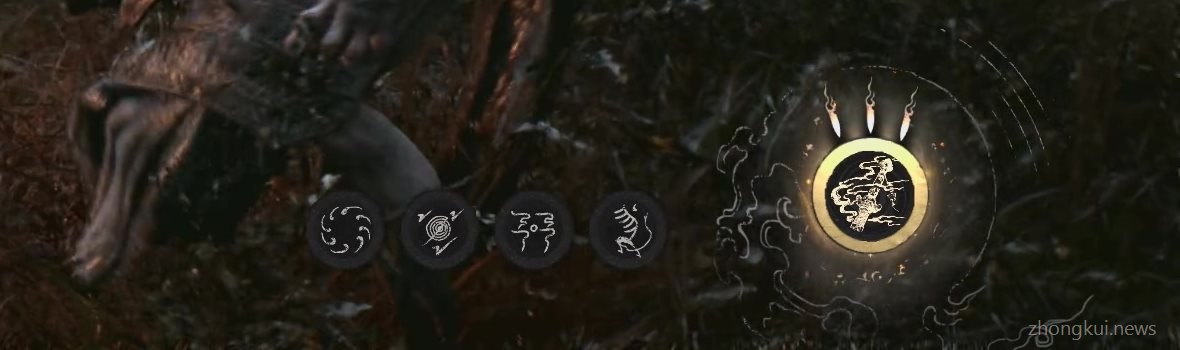
The four small icons at the bottom right of the Zhong Kui demo's HUD are easy to scroll past. They shouldn't be — they're the closest thing the demo has to a thesis statement. The swordsman's skills use paper talismans (符箓, fulu): written commands that Daoist traditions use to summon, bind and dismiss spirits. We compared all four visible marks with ritual texts and early Chinese myth. The first has a strong textual parallel; the middle two are less certain; and the last resembles the one-legged thunder-beast kui. None of these identifications has been confirmed by Game Science.
Research boundary. Game Science has not named or explained the skills. Icon identifications below are readings of the footage against ritual texts; where an identification is tentative, it is labeled. Translations from Chinese texts are ours unless noted.
What we found
- The fire icon's strongest match is the huolun dakan fu — a fire-wheel talisman from the Ming ritual compendium Daofa Huiyuan, used to make hostile spirits identify themselves.
- The second icon is visible, but we have not found a primary source that identifies its wheel-and-crossed-stroke design.
- The third icon is the best candidate for the demonstrated blade enchantment, whose effect broadly follows Daoist thunder-rite imagery; the icon-to-effect link remains unconfirmed.
- The fourth icon's coiled beast resembles the kui (夔) of the Classic of Mountains and Seas. A black-cloaked ally appears later in the footage, but Game Science has not said that this icon summons it.
- Talismans in this game are not just attacks: they catch, wrap and subdue spirits, which is exactly what talismans are "for" in the tradition.
First, what a fulu actually is

Western fantasy treats spellcasting as inner power channeled outward. The Daoist talisman works more like a legal document: a fulu is a written order, brush-ink on paper, issued by someone with the authority to command spirits. The right document, properly executed, can summon a spirit, bind it, banish it — or force it to state its name. That bureaucratic flavor is the whole point of Zhong Kui, a judge of ghosts: his magic is literally paperwork with teeth. The demo leans into this hard — talismans aren't a spell menu, they're the swordsman's warrant card. Analysis
Icon one: the fire-wheel arrest warrant
The first skill icon — a whirling flame wheel — has the strongest textual match of the four. The Daofa Huiyuan (道法会元), a vast Ming compilation of ritual methods, preserves the huolun dakan fu (火轮大勘符), the "great fire-wheel inquiry talisman": a fire-wheel invoked to interrogate and burn away hostile spirits, compelling them to reveal themselves (juan 124, Chinese Text Project).
The fit is double. Visually, the icon's radiating wheel matches the fire-wheel convention. Functionally, an arrest order that forces a spirit to show itself is exactly what the demo's fire does to groups of concealed, hood-wrapped ghosts — and it rhymes with the game's broader rule that naming and seeing a spirit is how you beat it (our creature research traces that pattern). The identification stays an informed reading, not a confirmed one. Analysis
Icon two: the unresolved wheel sign
The second icon is not empty. It shows a small concentric wheel crossed by two diagonal strokes. An earlier research lead compared the upper strokes with a talisman heading and the center with another fire wheel, but we have not found an exact primary-source diagram that supports that reading. The released footage also does not label the icon or isolate its activation clearly enough for us to match it to one demonstrated move. Visible, distinct — and unresolved. Analysis
Icon three: the thunder candidate
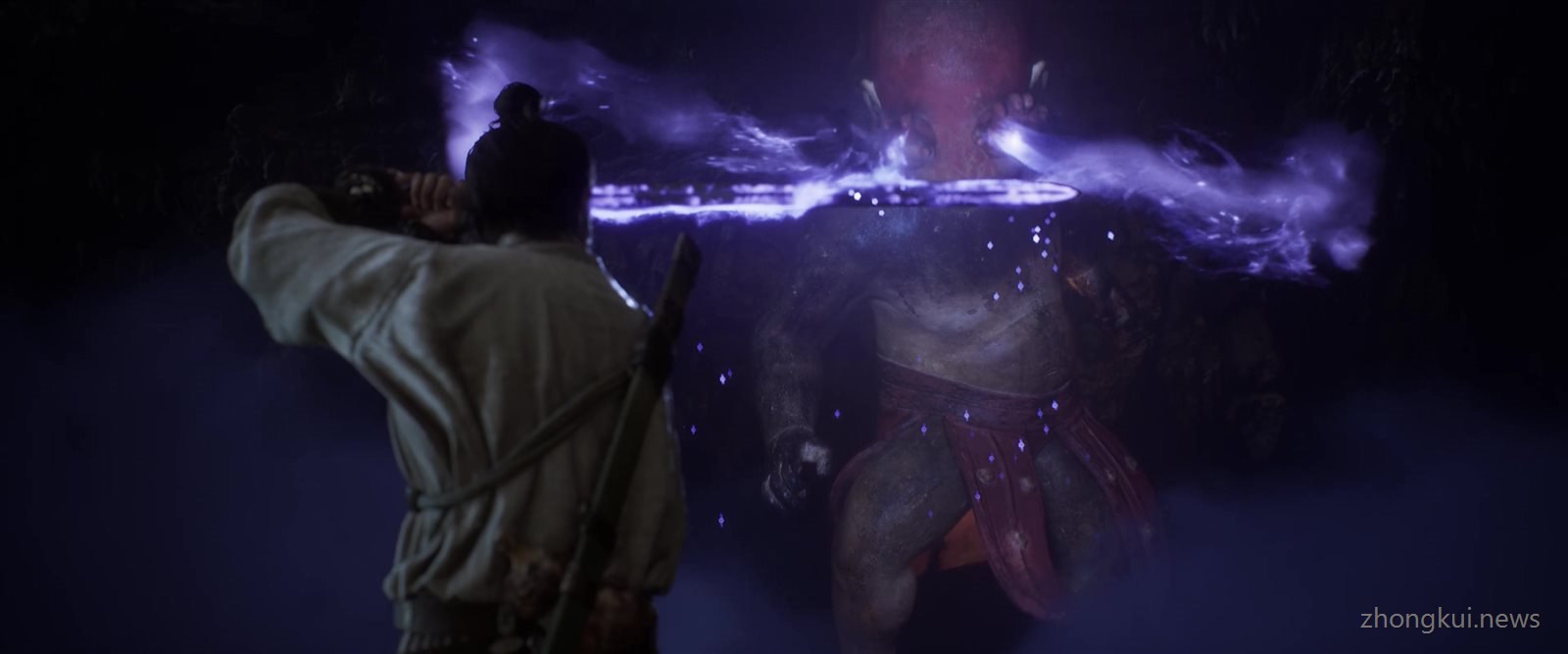
The third icon's stacked, bent strokes resemble the cloud-script forms associated with thunder writing, making it the strongest candidate for the blade enchantment shown elsewhere in the demo. The effect itself is clear: a talisman is pressed to the sword and the blade carries arcing electricity through the combo. That broadly follows the formula of Daoist thunder rites (雷法), in which written thunder commands and ritual weapons work together. What we do not have is an exact historical talisman matching this glyph, or an official demonstration proving that icon three triggers the effect. It is a ritual parallel, not a traced source. Analysis
Icon four: a possible kui beast
The fourth icon — not the third — shows the clearest creature silhouette in the row: a coiled body balanced on what may be a single leg. Its best mythological parallel is the kui (夔) of the Classic of Mountains and Seas (《山海经·大荒东经》): "shaped like an ox, blue-bodied and hornless, with a single leg; its voice is like thunder. The Yellow Emperor made a drum of its hide, whose sound carried five hundred li" (CTP). The resemblance is visual and thematic, not a ritual-source identification. The kui image could also be a generic beast seal or decorative motif. Analysis

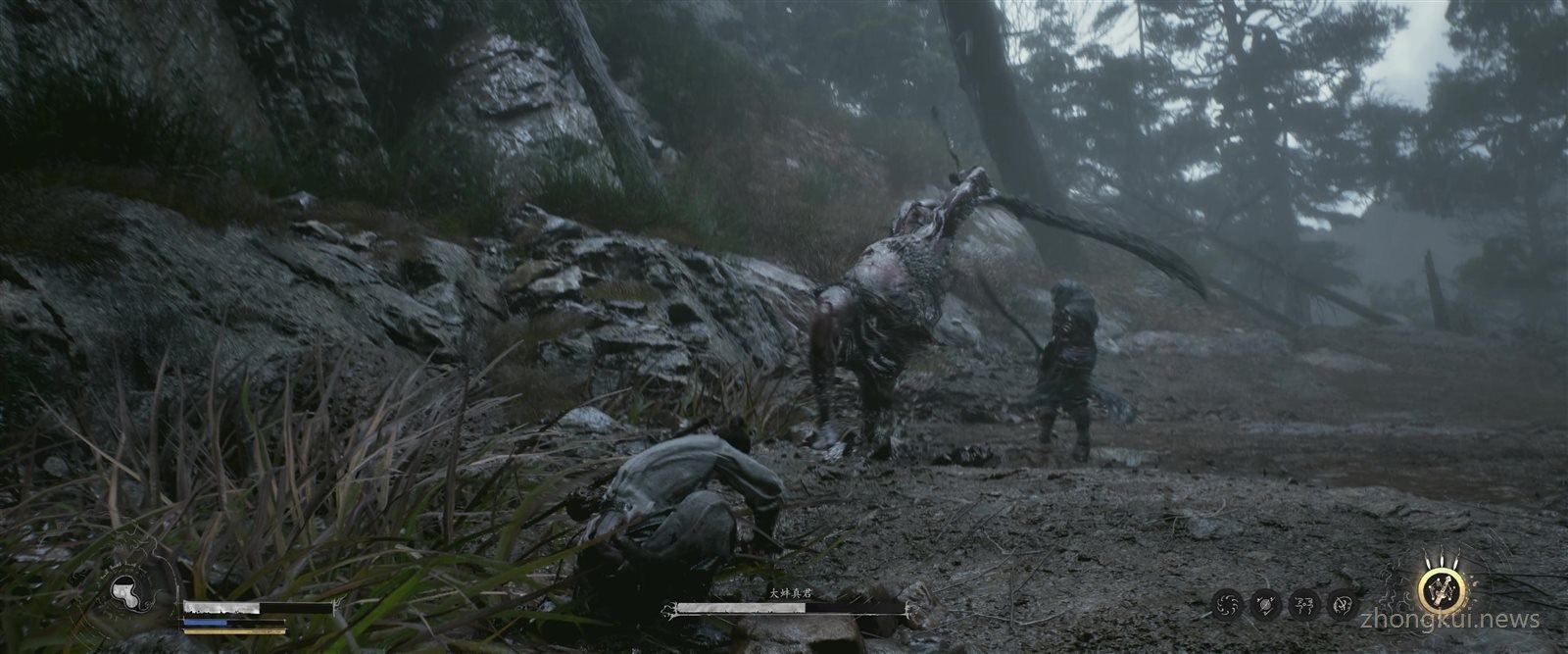
A black-cloaked ally does appear beside the swordsman later in the footage. That makes a command-or-summon reading plausible, but the video never names the move or proves that the fourth icon triggers it. The summoned figure is also plainly not the ox-like beast shown in the book illustration. This is where the comparison breaks down. Analysis
Talismans that catch, not just burn
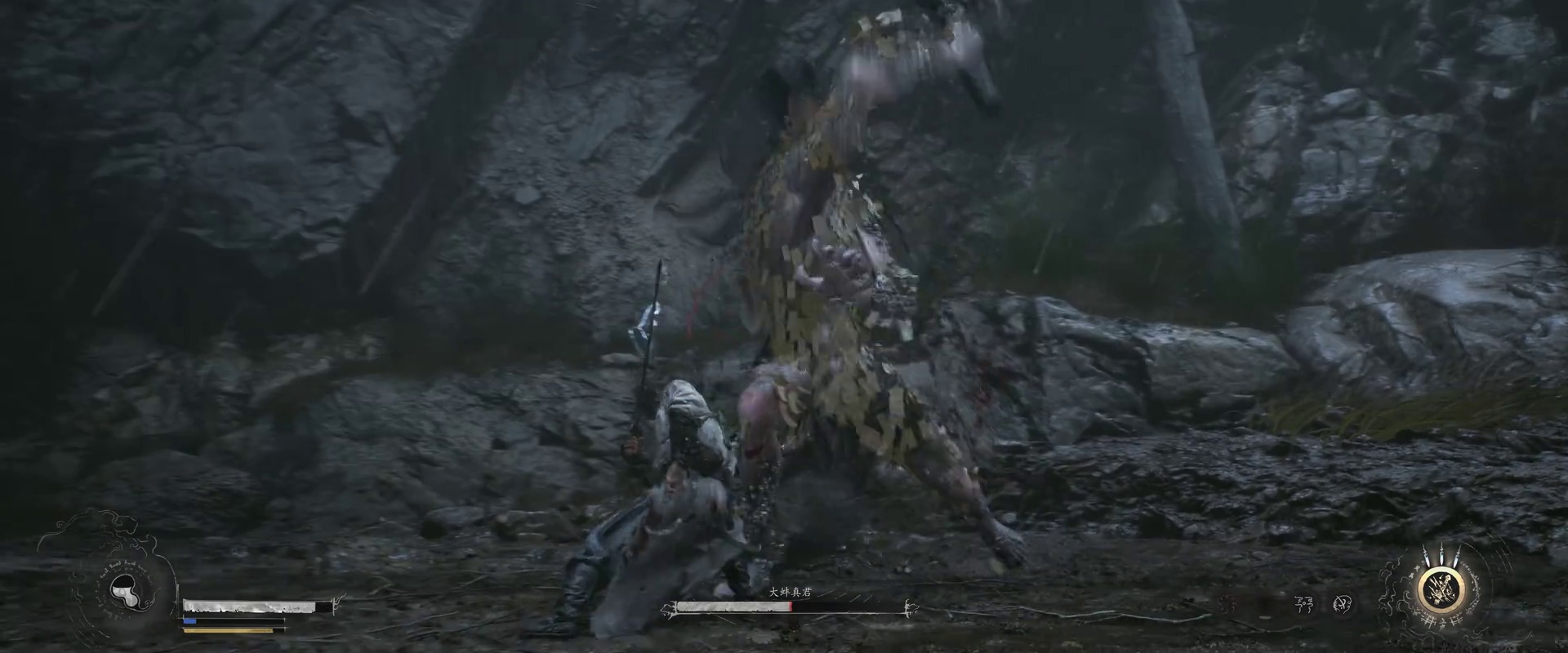
The most interesting talisman behavior in the demo isn't an attack at all. In the boss fight's third phase, paper talismans fly to the giant clam and wrap it — a visible binding that holds the creature in place. In the montage, the swordsman pins a flying fish with a burning talisman rather than cutting it down. And the guide figure himself dissolves into a talisman to keep leading the way. Subdue, bind, convert: that's the same verb family as the huolun dakan fu's arrest function, and the same job description as Zhong Kui's, the ghost-catcher who puts the dead to work. Observed
The sword itself is a ritual instrument
One last layer. In the Daoist frame the game borrows, the sword isn't just a weapon that carries talismans — it's a ritual object in its own right (法剑), the exorcist's standard tool. The Southern Song liturgical compendium Wushang Huanglu Dazhai Licheng Yi (《无上黄箓大斋立成仪》, juan 2) puts it in a master's words: "剑者,辟邪制非,威神伏魔" — "Of the sword: it repels evil and checks wrongdoing; with divine might it subdues demons" (CTP). And the Qing novel that supplies so much of this game's cast sends Zhong Kui out with a bronze sword at his hip (《钟馗斩鬼传》, chapter 1). Talisman on sword, sword in hand of a judge: the loadout is the theology. Analysis
What we still don't know
- The official names and full list of the talisman skills.
- Whether the fire icon is deliberately the huolun dakan fu or a generic fire-wheel.
- Whether more talismans summon allies, and how possession interacts with them.
- Whether talismans are crafted, found, or leveled in the full game.
Related: the combat mechanics, the creature research, the thousand-year image of Zhong Kui, and the latest official updates.
A note to readers
Unless otherwise noted, the ritual-source identifications, frame analysis and translations are by ZhongKui News. If you cite this research: ZhongKui News, "The Talismans of Black Myth: Zhong Kui," August 2026. Corrections and research questions are welcome via our contact page.
Update log. Published August 2026. Icon identifications are informed readings, not confirmed sources. Frames are from the official gameplay video.
Sources
Official material
- Official gameplay video. Black Myth on YouTube, August 20, 2026. All timestamps and frames; also official Bilibili upload.
Primary texts
- Daofa Huiyuan, juan 124 — Chinese Text Project. The fire-wheel inquiry talisman.
- Classic of Mountains and Seas, Great Wilderness: East — CTP. The kui of Mount Liubo.
- Wushang Huanglu Dazhai Licheng Yi, juan 2 — CTP. "Of the sword: it repels evil and subdues demons."
- Liu Zhang (attr.), Zhong Kui Slays the Ghosts, ch. 1 — CTP. The ghost king's sword and registry.


