Black Myth: Zhong Kui Gameplay Demo Deep Dive
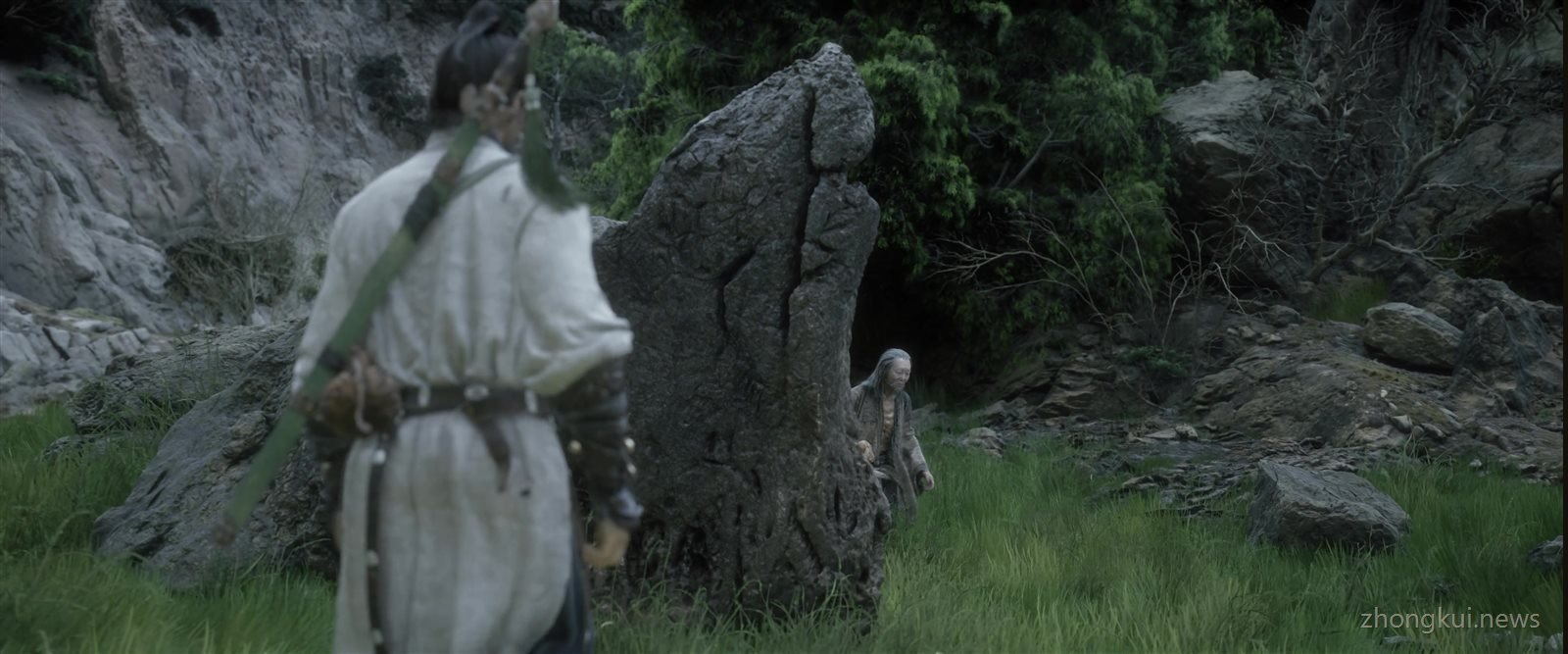
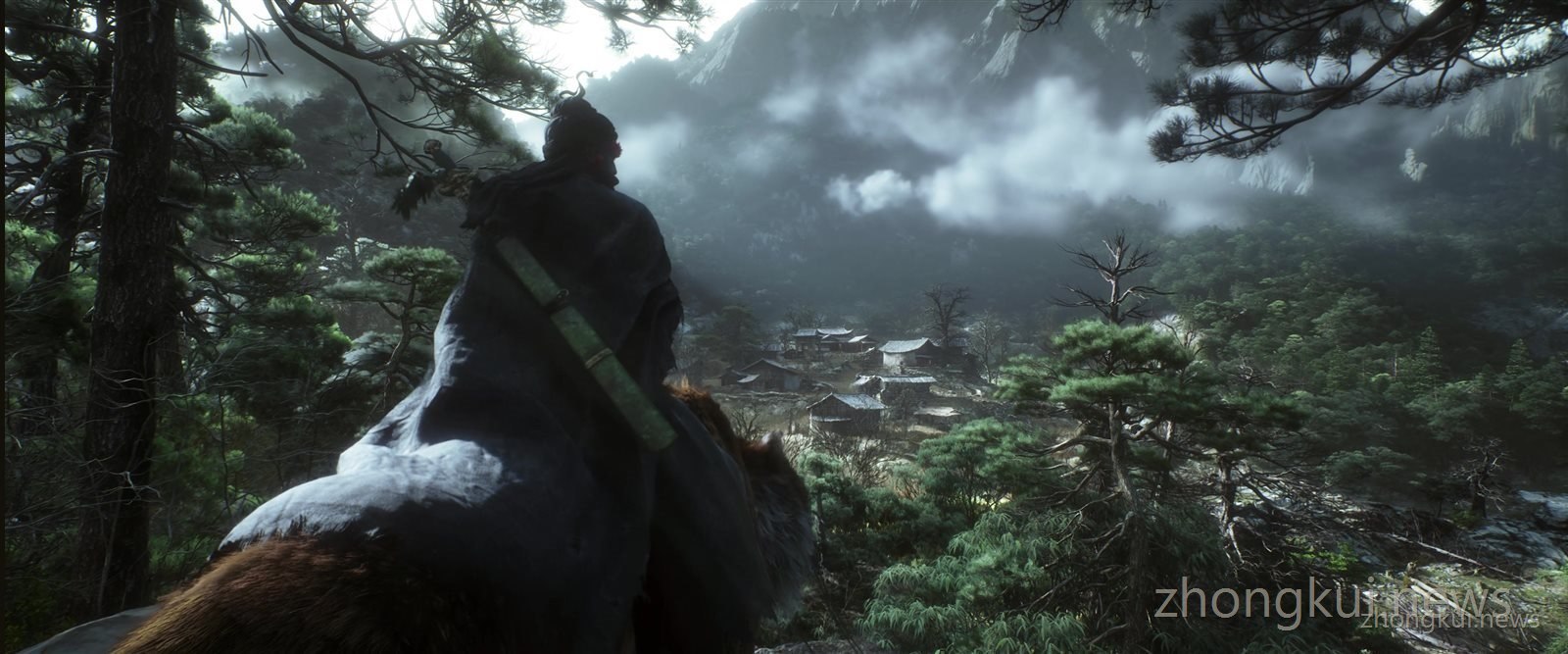
Game Science released the first gameplay footage of Black Myth: Zhong Kui on August 20, 2026. The video runs for 15 minutes and 53 seconds and comes from an in-development build. It covers exploration, a group fight, a boss encounter and a short closing montage. We watched it scene by scene to separate what appears on screen from the theories growing around it.
Official upload from the Black Myth channel. Game Science labels it as an in-development 21:9 build and notes that the final game may change.
30-second summary
- The new combat style is built around a straight sword. The footage shows close weapon clashes, visible deflections, paper talismans and a spirit fighting beside the player.
- The white-robed swordsman is most likely a younger Zhong Kui. His green scabbard closely matches the one carried by the tiger-riding Zhong Kui in the final shot. A mark on his forehead adds a second clue.
- The giant clam boss may draw on an old spirit tale. The strongest parallel we found involves a water spirit, a human woman and talismans used to expose the creature.
- The game uses Unreal Engine 5 and remains in development. Game Science has not announced a release date.
Video timeline
The official upload has no chapter markers. These timestamps make it easier to find the major scenes.
| 0:00 | A honeycombed rock appears in the mist. The poem and studio logo follow. |
|---|---|
| 0:20 | The white-robed swordsman wades through a reed marsh with a sword on his back. |
| 1:15 | A laughing old man appears on the shore. The scene ends with a yellow paper talisman flying away. |
| 2:00 | A large wave swallows the shore and leaves the swordsman stranded elsewhere. |
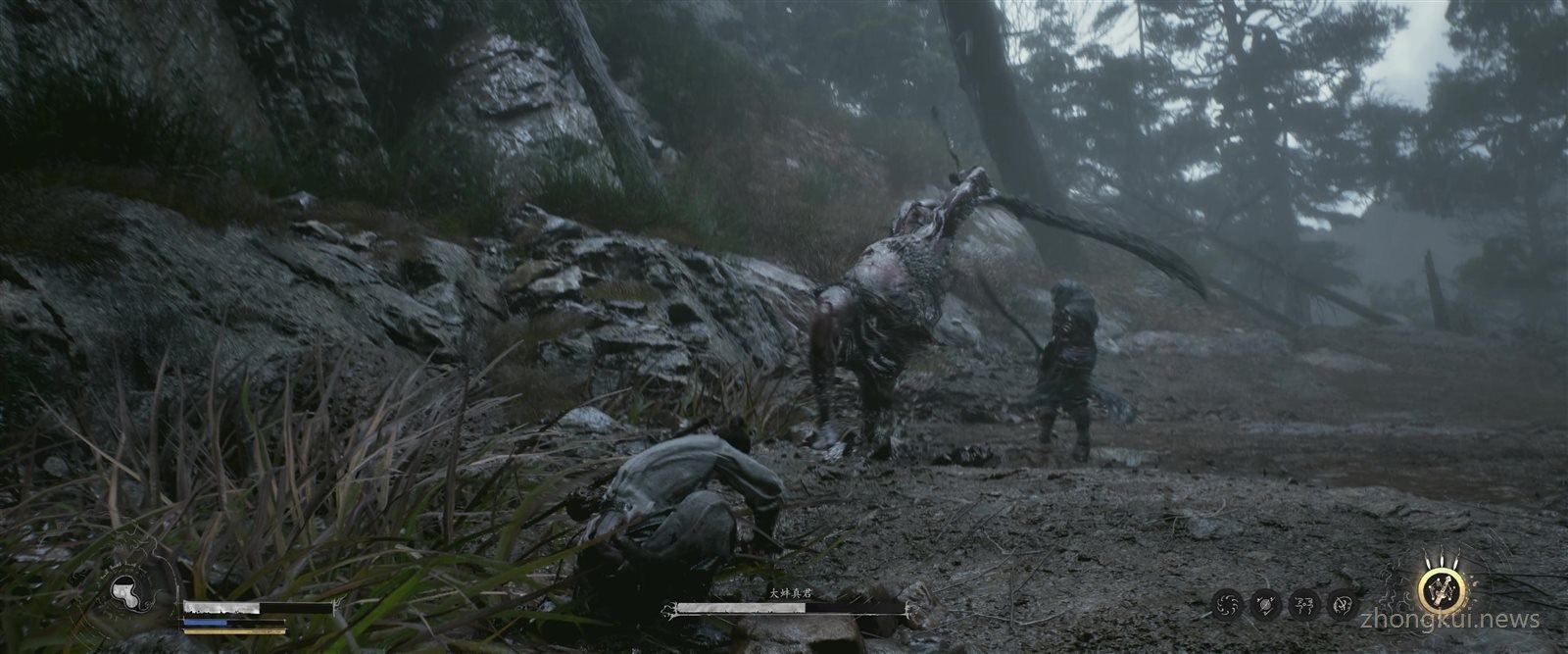
| 2:35 | A group of ghosts attacks in a muddy clearing. The combat HUD appears for the first time. |
| 5:00 | Larger ghosts enter the fight with clubs and axes. Sword clashes produce visible sparks. |
| 6:20 | The swordsman casts a paper talisman that sends fire through the group. |
| 8:05 | A green-tinted vision shows human figures suspended or falling in darkness. |
| 9:05 | The boss 大蚌真君 appears. We translate the name as "True Lord Giant Clam." |
| 11:00 | A tall figure in a black cloak joins the player during the boss fight. |
| 12:10 | The wounded boss flees. The pursuit leads to a pale woman rising from dark water at about 13:15. |
| 13:30 | The closing montage shows duels, a ghost kitchen, musicians, a spirit market, lightning magic and Zhong Kui riding a tiger. |
What the combat footage reveals
The demo shows four parts of the combat system. We can see the sword, a resource meter, paper talismans and a spirit ally. The exact rules behind them are still unclear, but the footage gives a useful picture of how they fit together.
The straight sword favors close exchanges. Wukong's staff created space with long sweeps and acrobatic movement. Zhong Kui's sword keeps the player closer to the enemy. Around the 5:00 mark, several attacks meet weapon against weapon and throw sparks. The footage suggests that blocking and deflection will matter more here than they did in Black Myth: Wukong.
Basic attacks appear to build a resource for stronger moves. The lower-left HUD contains health and spirit bars, while another meter changes during combat. The rhythm looks familiar to Wukong players. Regular attacks build toward a stronger technique, giving the player a reason to keep attacking rather than retreat after every exchange.
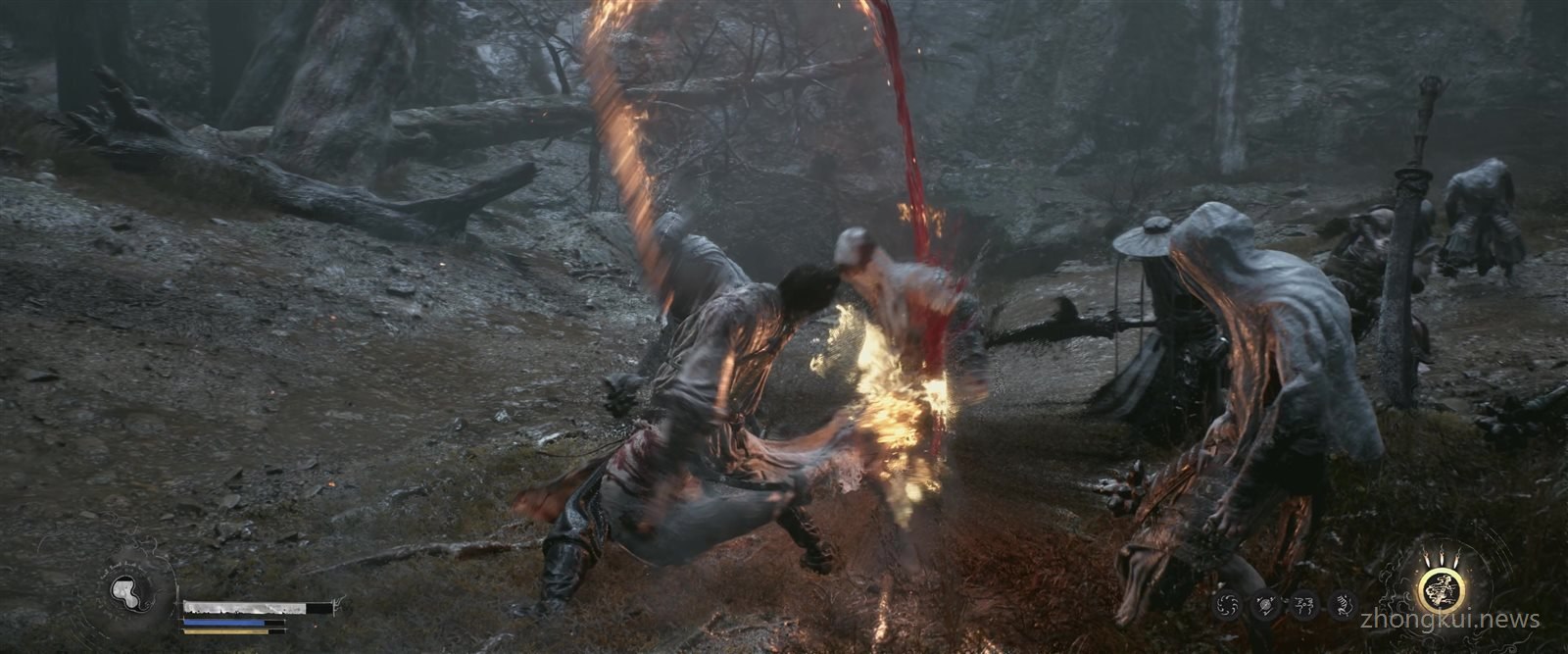
Paper talismans work like spells written as commands. The swordsman uses fulu (符箓), paper charms associated with Daoist ritual. Such talismans can call, restrain or dismiss spirits. In the demo, one sends fire along the ground and another interrupts a group of enemies. The casting animation flows directly out of the sword combo, so the player does not stop to open a separate spell menu.
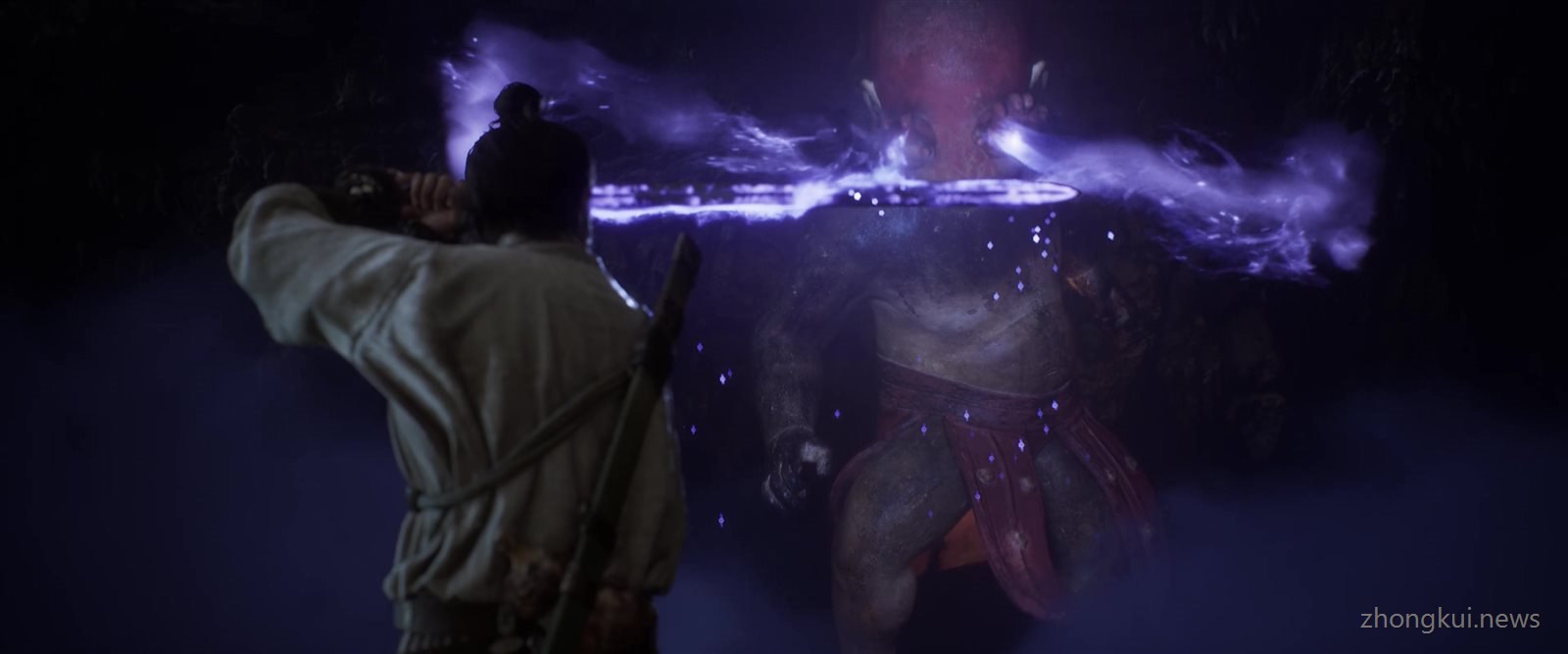
The black-cloaked spirit stays in the fight. It appears during the clam encounter and acts as a second combatant rather than a single attack effect. Several Chinese analyses also read part of the sequence as the player using the spirit's own moves. That points to a system combining summoning with some form of possession. One boss encounter cannot show how large that system is, but the idea suits a character famous for commanding ghosts.
The skill icons resemble Daoist talismans
The small circular icons at the lower right use the same dense strokes and vermilion-on-paper look found in Daoist talisman writing. The clearest proposed match is the fire-wheel icon. A Bilibili creator compared it with the huolun dakan fu, a fire-wheel talisman preserved in the ritual collection Daofa Huiyuan. Analysis
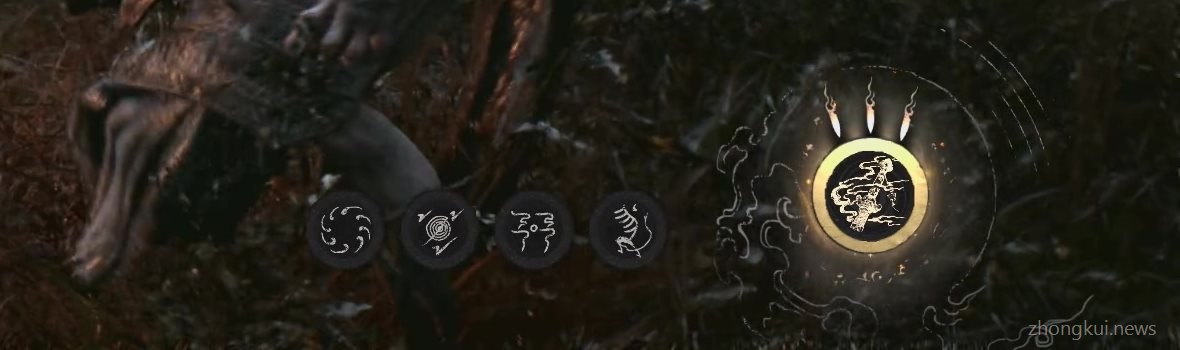
Gamersky relayed the comparison, and the classical text can be read online in Chinese. Its fire-wheel talisman calls on supernatural forces to make a hostile spirit identify itself. That function fits Zhong Kui unusually well. He is a judge and captor of ghosts, so a supernatural arrest order is a convincing source for one of his combat icons.
Why the swordsman is likely a younger Zhong Kui
Game Science has not named the playable swordsman. The footage points most strongly to a younger Zhong Kui, before he becomes the large, bearded Ghost King shown at the end.
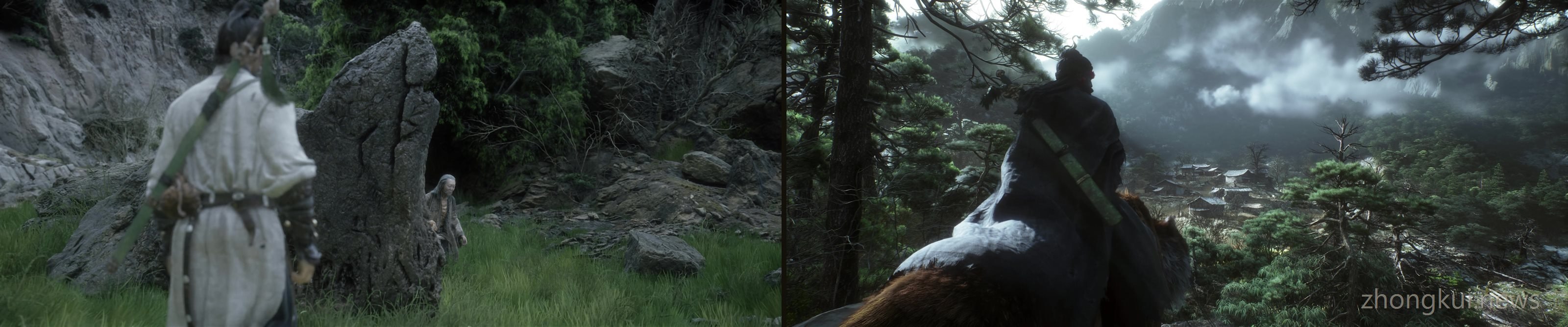
Both figures carry a long scabbard wrapped in the same distinctive green and worn at a similar angle. The matching design makes the same weapon plausible and strongly supports the idea that we are seeing one man at two ages.
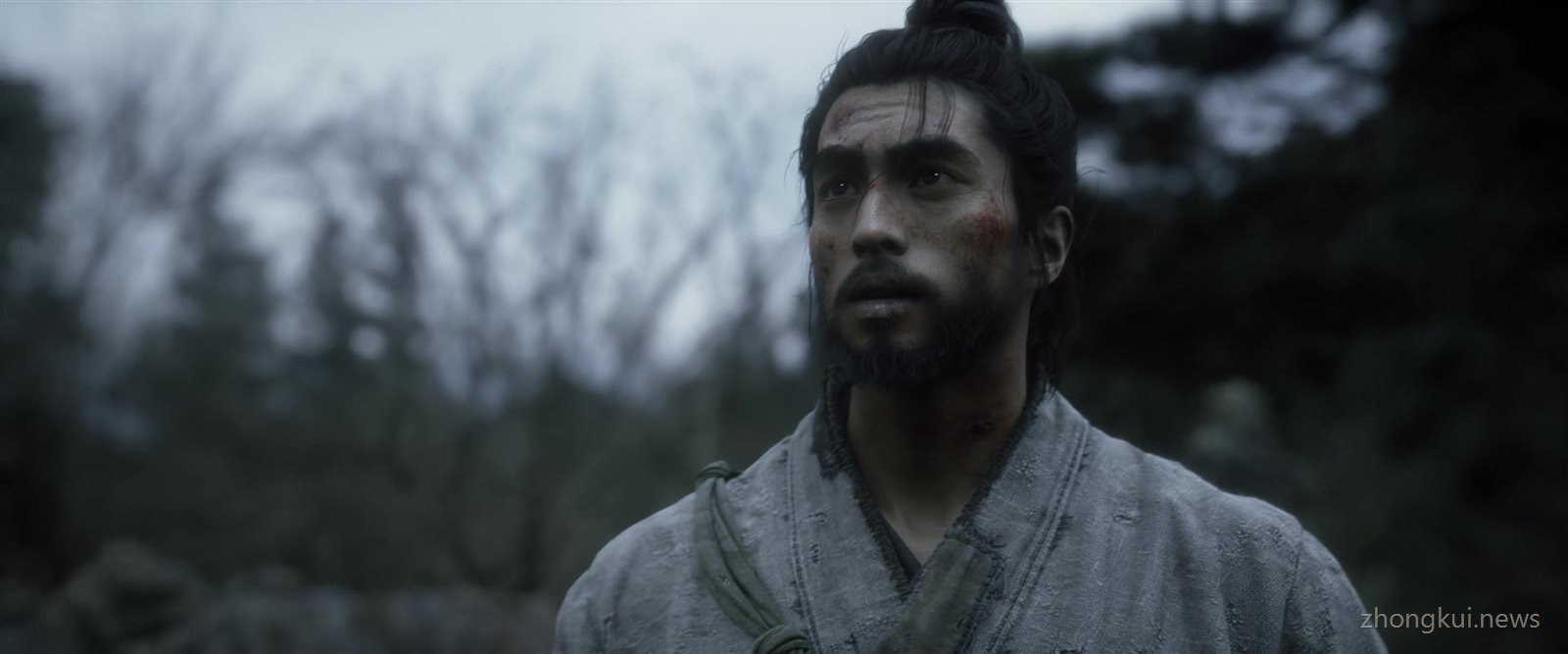
The mark on his forehead adds another clue. In popular versions of the legend, Zhong Kui is a brilliant scholar denied his honors because of his appearance. He dies after striking his head against palace steps or a pillar. Earlier texts do not give this account of his death, so the wound belongs to a later strand of the story. If the mark is deliberate, Game Science may be using that version. The scabbard, the forehead mark and the final image all point in the same direction. A younger Zhong Kui is the best explanation so far.
The Giant Clam's possible literary source
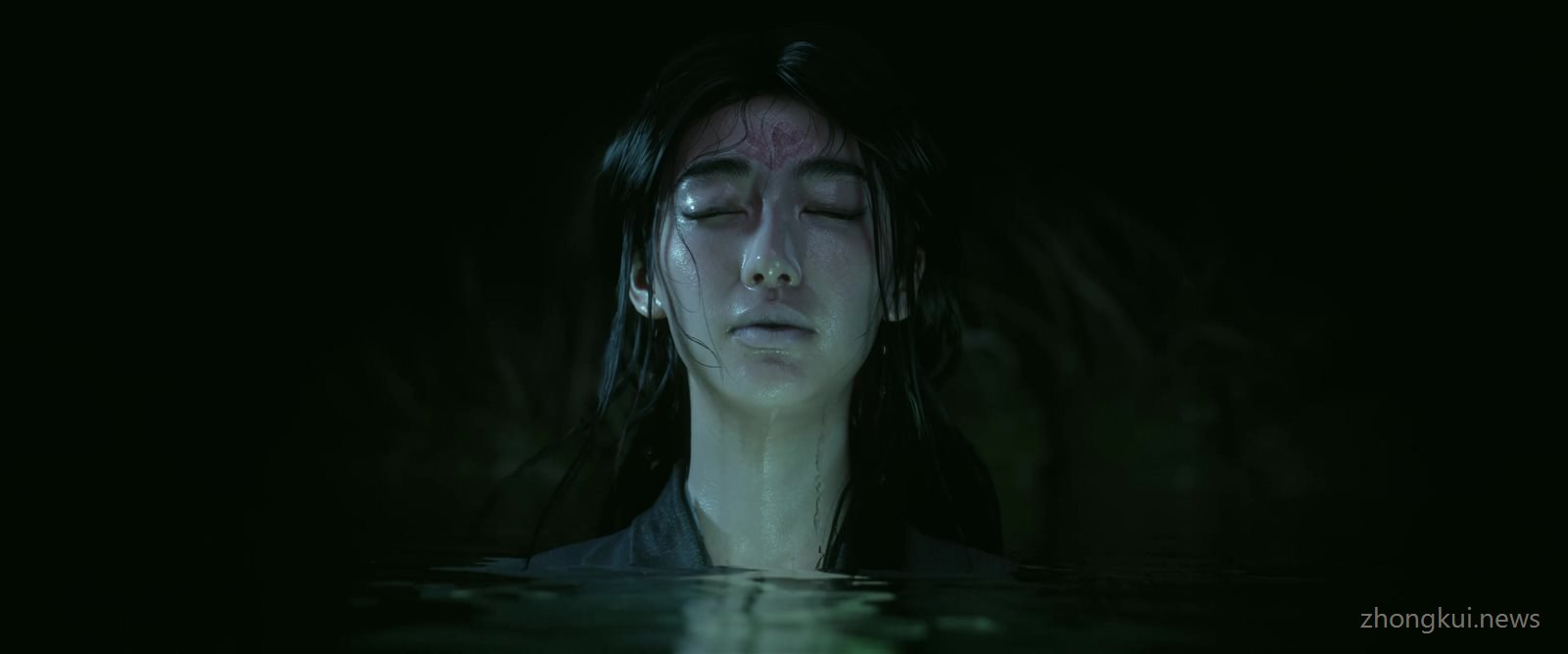
The main boss is 大蚌真君, which we translate as "True Lord Giant Clam." It attacks from between two barnacle-covered shells, exposes softer parts as openings and eventually flees into a cutscene where a pale woman rises from black water.
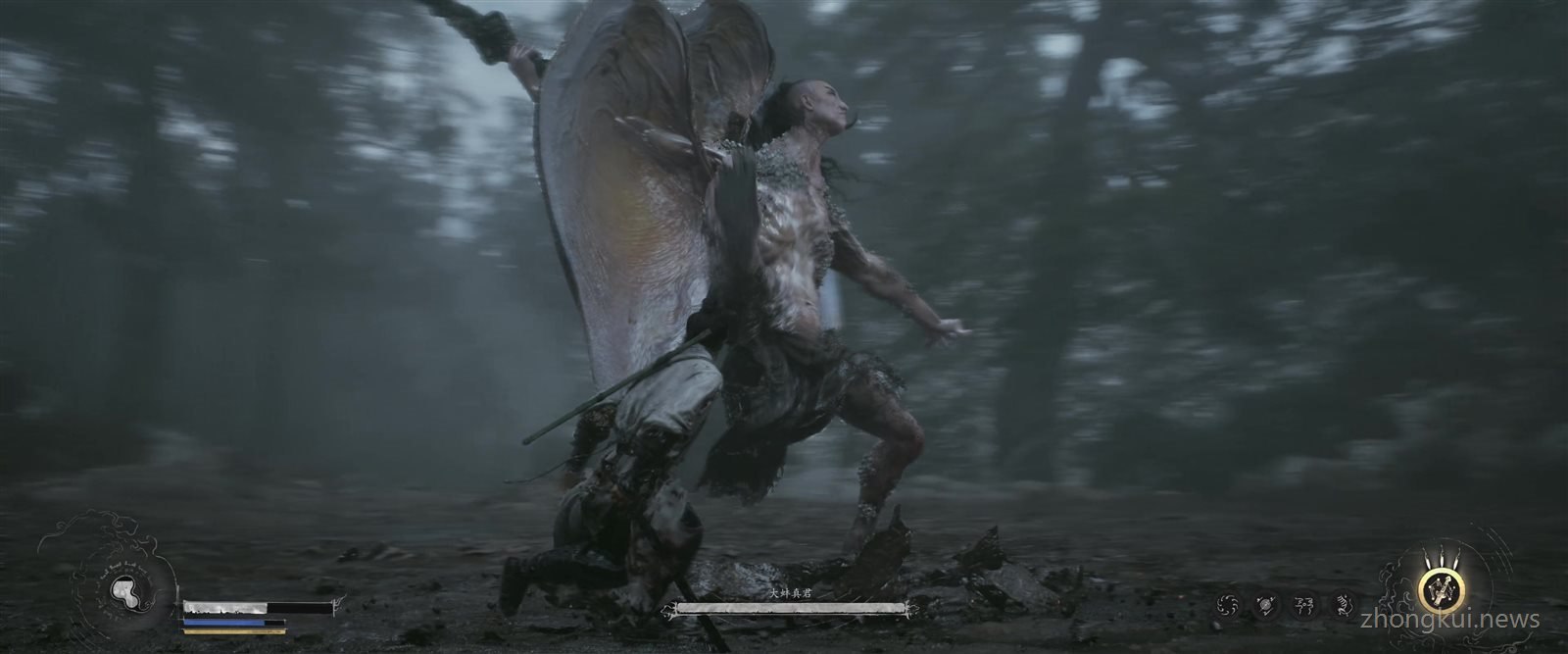
Chinese outlet Yystv linked the boss with the story of Shenlang preserved in the Northern Song collection Taiping Guangji. The episode draws on an earlier tradition attributed to the Tang period. In the story, the Daoist master Xu Xun exposes a water creature that has taken the form of a handsome man and married a prefect's daughter. The creature's home collapses into water when its identity is revealed, and talismans save the woman from transforming with it.
The overlap is substantial. Both stories involve a shellfish-like water spirit, a human woman and a Daoist figure using talismans. The demo appears to borrow this group of motifs rather than retell the episode scene for scene. The old word shen could describe a giant clam or a dragon-like creature associated with mirages, which also gives Game Science room to build its own monster.
Reading the demo's poem
The narration is a short poem. The translation below is ours because Game Science has not published an official English version.
"Blood beneath the sword, dyed into fresh makeup, like an old friend visiting in dreams. The past is gone, yet stubbornly unforgotten. The mortal world ages fast. The righteous road runs long. Debts of love and hate defy a final chapter. Who says the road to the Yellow Springs is far? Good. Let us walk it once more."
"Yellow Springs" is an old Chinese name for the underworld, recorded as early as the Zuo Zhuan. The invitation to walk that road "once more" suggests a return rather than a first journey. The poem also links blood with fresh makeup and an old friend with a dream, language that may connect the swordsman with the woman in the water. Combined with the younger-Zhong-Kui reading, it points toward a story about the events that turn a wronged scholar into the ruler of ghosts. Our Lore guide explains the legend behind that transformation.
What Yang Qi wants to improve after Wukong
Art director Yang Qi published a long post alongside the demo, preserved in a Chinese media mirror. He discussed five areas where the team wants to improve on Black Myth: Wukong. Several are visible in this footage.
Yang Qi wrote about making overcast scenes look convincing without hiding lighting problems behind golden-hour colors. The entire demo takes place under grey marsh light. He also discussed stronger physical feedback in combat, and the sword clashes here use sparks, recoil and stagger animations to make contact readable. His criticism of staged conversations appears in the old-man scene, where the character keeps eating, laughing and moving while the weather changes around him.
The video cannot tell us whether invisible walls have been fixed, even though the long walk through the marsh shows the kind of space the team wants to build. Yang Qi also used the word satuo for Zhong Kui's temperament, meaning a loose, unforced confidence. The calm swordplay and the louder closing montage both fit that description.
Yang Qi described the footage as one test map joined to several unfinished story fragments. Some systems remain experimental. Feng Ji made a similar point while sharing the studio's internal work principles, joking that the story was still too unfinished to spoil. The footage shows the team's current direction at an early stage.
How it compares with Wukong's 2020 demo
The two videos came from different stages of production, but their visible choices are easy to compare.
| Primary weapon | Wukong used a staff. Zhong Kui centers its footage on a straight sword. |
|---|---|
| Defense | Wukong emphasized dodging and spacing. The new footage shows more weapon contact and possible deflection. |
| Magic | Wukong showed spells and transformations. Zhong Kui introduces paper talismans and lightning techniques. |
| Spirit ally | No comparable sustained ally appeared in the 2020 video. A black-cloaked spirit remains active during the clam fight. |
| Development framing | The 2020 video played like a polished vertical slice. Game Science openly calls the new footage a test build. |
Both games are single-player action RPGs sold as one-time purchases. Game Science says Zhong Kui is planned for PC and mainstream consoles, but it has not named individual systems or announced a release date.
What remains unknown
- The swordsman's official identity. The younger-Zhong-Kui reading fits the available clues, but the studio has not named him.
- The size of the spirit system. The footage shows one sustained ally and hints at possession. It does not show whether players can collect or switch between several spirits.
- How much of the final game this represents. Yang Qi calls it one test map, while the montage shows several other locations.
- The release date. Game Science has announced no year or launch window.
Every official video is available on the Trailers page. We also have separate articles on the 2025 reveal teaser and the Chinese New Year short.
Update log. Published August 20, 2026 and revised the same day with timestamps, frames from the official video and additional source checks. Community interpretations are identified as analysis.
Sources and further reading
- Official Black Myth: Zhong Kui page and FAQ. Game Science. Platform scope, purchase model and development status.
- Official gameplay video. Black Myth on YouTube, August 20, 2026.
- Official Bilibili upload. Game Science, August 20, 2026.
- Chinese demo breakdown. Gamersky. Boss name, spirit observations and interface details.
- Chinese report on the demo sequence. 17173. The old man, the fleeing boss and the woman in the water.
- Chinese combat analysis. Jinghe via NetEase. Deflection and spells used within attack strings.
- Chinese talisman-icon analysis. Gamersky relaying Suoma's image comparison.
- Daofa Huiyuan, juan 124. Chinese Text Project. The fire-wheel talisman tradition.
- Chinese article on the Shenlang parallel. Yystv. The author presents the link as literary riffing.
- Yang Qi's five improvement areas. Chinese media mirror of his post.
- Feng Ji's internal work principles. IT Home, August 20, 2026.
- Chinese demo-day roundup. 36kr via NetEase.
- Chinese community reaction roundup. Gamersky, August 20, 2026.
- Zuo Zhuan, Yin Gong year 1. Chinese Text Project. An early use of "Yellow Springs."


